
DIY Non-B Visa Run to Laos: Vientiane or Savannakhet

Print the PDF. Cash at the Window. TM30 When You Get Back.
I've lived in Thailand for 20 years, and Nicole, one of our teachers in Lampang, made this trip to Vientiane herself. Not every teacher needs a visa run. If yours does, print the approval PDF, ask how to pay at the window, and tell your landlord when you get back. Every case is different, so ask your school first. This is not legal advice.
Not every teacher needs a visa run. Some arrive with a Non-B visa from home, and some convert at their provincial immigration office. If you do go to Laos, the usual choice is Nong Khai to Vientiane or Mukdahan to Savannakhet. South African passport holders are required by consular rules to apply at the Royal Thai Embassy in Vientiane rather than the Savannakhet consulate. Many applicants submit the e-Visa only after they have a Lao entry stamp, then print the approval. Your case is your own: Immigration and the embassy or consulate decide, and you should check visa.go.th the week you travel. KET is a placement agency, not Immigration, an embassy or a visa agent, and this page is not legal advice. See our Thailand teacher visa overview and Non-B visa guide.
01: Do You Need a Visa Run?
Not every teacher does. Ask your school first.
"In 20 years here, I have seen it go every way. One teacher arrives with a Non-B from home, another converts at the provincial immigration office in Sukhothai, and some travel to Laos. It depends on your entry stamp, your passport, your school paperwork and the province. Ask your school before you book anything."Matthew John : Co-Founder & Operations Manager, KET
| Pathway | Entry Condition | Where Processed | Worth Knowing |
|---|---|---|---|
| Non-B From Home | You arrive with a Non-B visa already stamped by an embassy in your home country. | The Thai embassy or consulate in your home region. | Your school paperwork has to reach you before you leave. |
| Convert in Thailand | You arrive on a visa exemption and your school starts a Non-B conversion. | Your provincial immigration office. | Only if the timing and the provincial office allow it. |
| Overseas Visa Run | Conversion in the province is not possible, or your status needs consular processing. | The Thai consular post in Vientiane or Savannakhet, Laos. | Some teachers do this. It means border travel and a few nights away. |
02: Vientiane vs Savannakhet
Two crossings, two consular posts.
Vientiane (Nong Khai) 🚆
Crossing: the First Thai-Lao Friendship Bridge links Nong Khai to Vientiane. Many people travel to Nong Khai by overnight train or bus.
Consular post: applications are handled at the Royal Thai Consular Section at 15 Rue Bourichane, which is separate from the embassy chancery on Avenue Lane Xang. Check the address on the embassy website before you go.
Savannakhet (Mukdahan) 🚌
Crossing: the Second Thai-Lao Friendship Bridge links Mukdahan in Thailand to Savannakhet in Laos. Check how the buses run from Mukdahan before you go.
Consular post: applications go to the Royal Thai Consulate-General in Savannakhet. It may use an online appointment system, so check the booking rules before you travel.
03: The Border Trip: Five Steps
In order, and case-specific.
🛠️ How to Prepare for a DIY Visa Run to Laos
-
Check Which Pathway You Are On
Ask your school or agency whether you need an overseas run at all. Some teachers arrive with a Non-B visa already stamped, and some convert at their provincial immigration office. Have your school paperwork ready before you book anything.
-
Choose Vientiane or Savannakhet
Nong Khai leads to Vientiane over the First Friendship Bridge, and Mukdahan leads to Savannakhet over the Second Friendship Bridge. South African passport holders are required by consular rules to apply at the Royal Thai Embassy in Vientiane rather than the Savannakhet consulate.
-
Cross the Border
Travel to Nong Khai or Mukdahan, clear Thai exit immigration, cross the bridge and complete your Lao entry. Check the current Lao entry rules and fees for your passport before you go.
-
Submit and Pay at the Consular Post
Many applicants fill in the e-Visa on visa.go.th and submit it only after they have a Lao entry stamp. Ask the post how to pay. Cash in Thai Baht is commonly mentioned, so check before you travel.
-
Print the Approval and Tell Your Landlord
Print a paper copy of your approved e-Visa before you cross back. When you return, send your landlord a photo of your new entry stamp so they can file your TM30, and check our TM47 guide for your 90-day count.
04: Sample Costs: Example Only
Illustrative numbers, not a quote.
💵 What Changes the Cost
Costs depend on how you travel (train or bus), where you stay, exchange rates and the consular fees. Fees change, so check the e-Visa portal and the consular post the week you travel. The estimator below uses example numbers only. We have not checked them, and they are not a quote.
🧮 Sample Expense Estimator (Example Only)
Pick the sample options below. The numbers are examples only. They are not real prices, not a fee schedule and not a quote.
* The prices, visa fees, fares and hotel costs above are example numbers for planning only. They are not current prices. Check the real fees and fares the week you travel.
05: Nicole's Trip to Vientiane
One teacher's account. Yours may differ.
Note: this is one teacher's personal account, and it reflects conditions at the time of her trip. It is not legal advice, and rules and schedules can change.
"When I was told that my initial visa paperwork needed a consular visit in Vientiane, I decided to manage the journey myself. Travelling by bus from Lampang to Nong Khai kept my costs modest, and I saw more of the northern and north-eastern provinces on the way.
'Taking time to prepare each document carefully, double-checking photo formats, and treating the trip with calm patience made the entire experience feel manageable and positive.'
My trip took about six days in total, including weekend days when consular offices are closed. In between checking application updates, I visited local morning markets and explored cafes along the Mekong River. Preparing my paper copies before heading back to the bridge made clearing Thai border control straightforward."
Clear Document Scans 📑
Use a scanning app to make clear PDF files without glare or thumb shadows, so the files are easy to read.
Show Your Lao Entry Stamp 🛂
Many applicants upload the passport page with the Lao entry stamp as proof that they are outside Thailand. Check what the portal asks for that week.
Print the PDF 🖨️
Print a paper copy of your approved visa confirmation in Laos before you head back to the bridge. Don't rely on a phone screen alone.
06: Back in Thailand: TM30 and 90 Days
Two different things. Don't mix them up.
TM30: Your Landlord or Host Files 🏠
Your landlord or host files the TM30, as explained in our TM30 guide. Many provinces, but not all, want a fresh TM30 when you come back, so check with your local office. Send your landlord a clear photo of your new entry stamp and visa page.
Landlord or host files it90-Day Report: You File 📅
The 90-day report (TM47) is separate from the TM30, and you file it yourself. Leaving Thailand usually restarts the 90-day count from your new entry stamp. For how to count and report, see our TM47 90-day report guide.
Usually restarts on a new entryVisa Run Questions
Is a visa run to Laos required for every English teacher in Thailand?
No. Visa procedures are case-specific. Some teachers arrive in Thailand already holding a Non-B visa from an embassy in their home country. Others arrive on a visa exemption and can convert to a Non-B locally at their provincial immigration office if the timing and the provincial office allow it. Some teachers do go on an overseas visa run to Laos (Vientiane or Savannakhet) when in-province conversion is not possible or when their initial status needs consular processing. Ask your school, and check visa.go.th the week you travel.
What is the difference between going to Vientiane and going to Savannakhet?
Vientiane is reached via the First Thai-Lao Friendship Bridge from Nong Khai, with consular applications handled at 15 Rue Bourichane. Savannakhet is reached via the Second Thai-Lao Friendship Bridge from Mukdahan in Isan, with applications submitted at the Royal Thai Consulate-General. Savannakhet may be closer if you are based in the northeast, but each post has its own appointment portal, intake hours and nationality restrictions, so check both before you choose.
Why are South African citizens required to go to Vientiane instead of Savannakhet?
Due to Thai consular jurisdiction guidelines and document processing regulations, the Royal Thai Consulate-General in Savannakhet does not process Non-B visas for certain nationalities, including South African passport holders. South African educators must apply through the Royal Thai Embassy Consular Section in Vientiane (or an embassy in their home region), where full consular jurisdiction applies.
What documents are needed before traveling to Laos for a Non-B visa?
Your school and the consular post decide the exact list, so confirm it before you travel. Items that are commonly mentioned are a sponsorship file from your school, your original degree, university transcripts, police clearance and a passport with at least six months of validity. Ask your school or agency to check your paperwork before you leave.
When should the online e-Visa application be submitted?
Many applicants fill in their paperwork on the e-Visa portal (visa.go.th) beforehand but submit it only after arriving in Laos with a Lao entry stamp, because consular staff commonly expect proof that you are outside Thailand. Rules change, so check the portal during your travel week.
What reporting steps are needed after returning to Thailand?
Your landlord or host files the TM30, as explained in our TM30 guide. Many provinces, but not all, want a fresh TM30 when you return, so check with your local office. Your 90-day count usually restarts from your new entry stamp. See our TM47 guide for how to count and report.
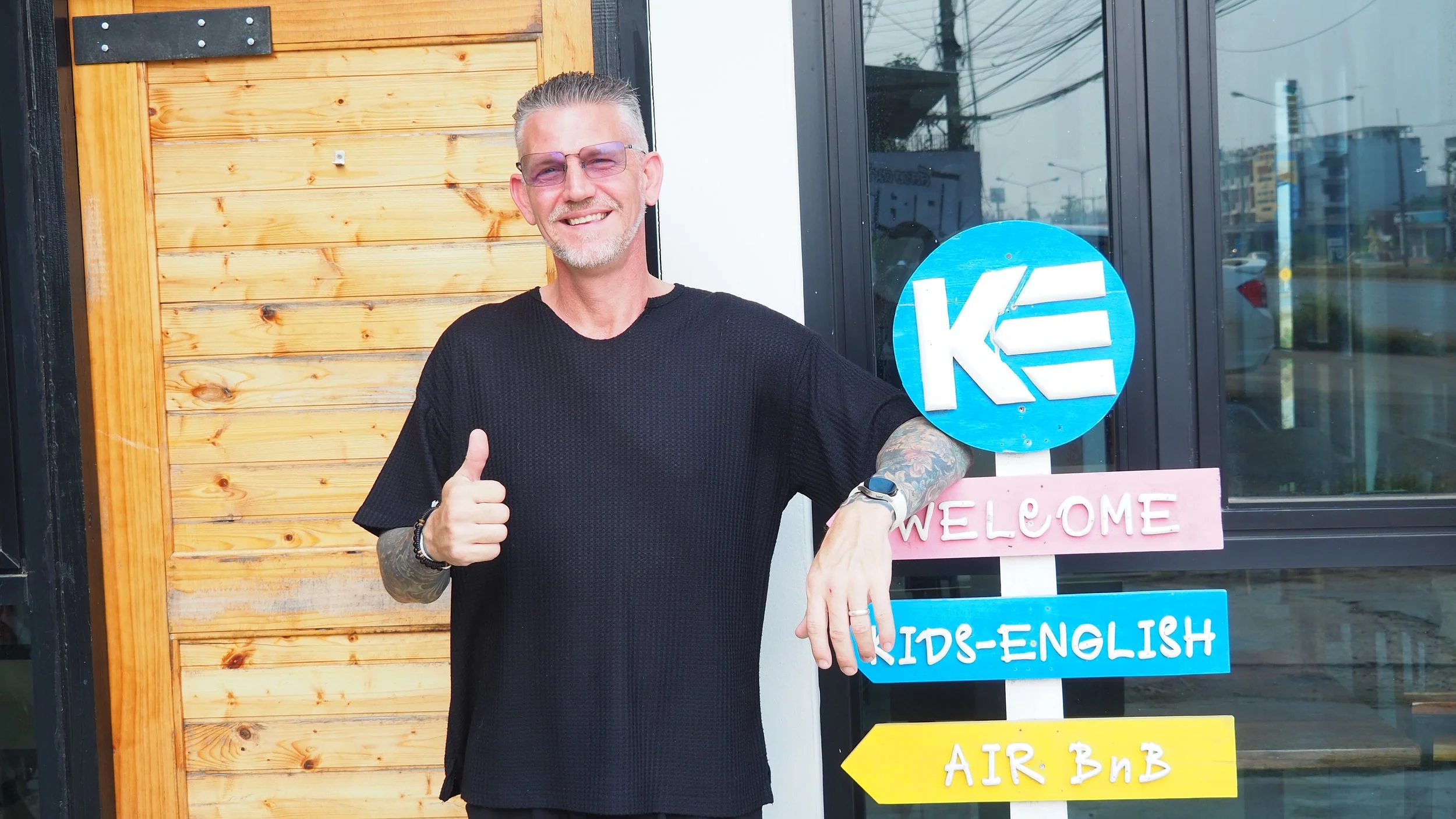
Matthew John
Co-Founder & Operations ManagerI'm Matthew, co-founder of Kids English Thailand. I've lived in Thailand for 20 years and work from our office in Ban Lum, Sukhothai. Since 2009 we have placed over 1,500 teachers in Thai schools, and I still learn something from my Thai colleagues every year.