
Thai Work Permit for Teachers: Digital Filing and Labour Office
School Files the Portal. You Sit for Prints. Fees Change.
I've lived in Thailand for 20 years, and from our office in Ban Lum I tell new teachers the same thing about the work permit: your school files it, you bring your originals, and you sit for your photo and fingerprints at the labour office. Tourist and DTV visas are not for teaching work. Fees change, so check that week. This is not legal advice.
Your school files the work permit. It comes after a Non-B visa through your school. Tourist and DTV visas are not for teaching work, and neither is a student (ED) visa, so check with your school and the Department of Employment. You bring your originals (degree, transcripts, police clearance) and get a Thai medical certificate. At the provincial labour office you may be asked to sit for a photo and fingerprints. Fees change, so check the week you apply. The school and the Department of Employment decide, not us. KET is a placement agency, not the Department of Employment or Immigration, and this page is not legal advice. See our Non-B visa guide and Thailand teacher visa overview.
01: Non-B First, Then the Permit
Your school files. You bring your originals.
"In 20 years here, the teachers who have the smoothest time are the ones who bring their originals and answer their school's messages quickly. Your school files the permit. Your job is to have the right papers and turn up when you are told. Tourist and DTV visas are not for teaching work, so check with your school before you start."Matthew John : Co-Founder & Operations Manager, KET
Non-B First ⚓
A work permit comes after a Non-B visa through your school. For the visa side, see our Non-B visa guide. Your permit is tied to your school and your job, so check the details against your contract.
Your School Files 🤝
Your school files the application. You do not file it yourself. KET is a placement agency, not the Department of Employment, and we do not file work permits for you.
The school and the Department decideTourist and DTV Are Not for Teaching 🚫
Tourist, student (ED) and DTV visas are not for teaching work. Check with your school and the Department of Employment before you start in a classroom.
02: What You Bring, What Your School Does
Ask your school for the exact list.
💻 The School Files Online
Your school files the application through the Department of Employment's online system and uploads its own papers with yours. Check the current address on the Department's own website, because it can change. Provincial labour offices can ask for different things, so let your school guide you.
| Item | Who Supplies It | What to Do | Worth Knowing |
|---|---|---|---|
| Bachelor's Degree | You | Original degree and transcripts. Do not laminate. Bring the originals with you. | Your school and the Department decide what they accept. See our degree legalization guide. |
| Police Clearance | You | Ask your school which one you need and how recent it must be. | For teaching, this is usually arranged through your school. See our police clearance guide. |
| Medical Certificate | You | From a Thai clinic or hospital when your school asks. | Ask how recent it must be and what it must cover. |
| School Papers | Your school | The school's own documents for the application. | Your school prepares these. You do not. |
| Passport Photos | You | Neat, plain background. | Ask your school what size and how many. |
Your school uploads copies of your documents. Photos with glare, shadows or cut-off corners can be sent back, which slows things down. A flatbed scanner or a scanning app gives clearer copies.
03: The Labour Office: Photo and Fingerprints
Your school will tell you when to go.
The Visit 🏢
Your school tells you when to go to the provincial labour office. Officers may check your original documents and take your photo and fingerprints. Bring your originals and your passport, and dress neatly.
It Varies by Office 📱
Offices can ask for different things. Some may ask you to use an app. Ask your school what your office needs, and don't assume it is the same as another province.
Ask your school04: The Work Permit: Five Steps
In order, and case-specific.
🛠️ How a Thai Work Permit Works for Teachers
-
Get a Non-B Visa Through Your School
Your school sponsors your Non-B visa. Tourist, education (ED) and DTV visas are not for teaching work. Check with your school and the Department of Employment.
-
Bring Your Originals
Bring your original degree (not laminated) and transcripts, a police clearance and passport photos. Ask your school for the exact list.
-
Get a Thai Medical Certificate
Have a medical certificate done at a Thai clinic or hospital when your school asks. Ask how recent it must be.
-
Let Your School File the Application
Your school files the application through the Department of Employment's online system. You supply your documents and passport pages.
-
Sit for Photo and Fingerprints
Go to the provincial labour office when your school tells you. Officers may check your originals and take your photo and fingerprints. Check the details on your permit against your contract.
05: Sample Costs: Example Only
Illustrative numbers, not a quote. Fees change.
💵 Fees Change
Costs can include a government fee for the permit and a medical certificate. Government fees and clinic prices change, so check the Department of Employment and your clinic the week you apply. Ask your school who pays for what, and get it in your contract. The estimator below uses example numbers only. We have not checked them, and they are not a quote.
🧮 Sample Permit Estimator (Example Only)
Pick the sample options below. The numbers are examples only. They are not real fees and not a quote, so check the Department of Employment that week.
* These numbers are examples for planning only. They are not current fees. Check the real fees and prices the week you apply.
06: Small Things That Help
Simple habits. Your school knows your office best.
Bring the Originals 🗂️
Bring your original degree and transcripts to Thailand, and keep them unlaminated. Pack them in your carry-on. See our degree legalization guide.
Dress Neatly 👔
A labour office is a government office. Wear neat clothes with covered shoulders and knees, and be polite. It is a custom, and your school may tell you more.
Ask About the Medical ⏱️
Ask your school when to get your medical certificate and how recent it must be, so it doesn't run out before your file is checked.
Teaching Licence Is Separate 🎓
The teachers' council licence is a separate matter from the work permit. See our Teachers License guide.
Work Permit Questions
Can I teach in a Thai school on a Tourist or DTV visa?
No. Tourist and DTV visas are not for teaching work, and the same goes for a student (ED) visa. Teaching in a school needs a Non-B visa and a work permit through your school. Check with your school and the Department of Employment.
Who files the work permit application?
Your school files it through the Department of Employment's online system. You supply your documents, such as your degree, police clearance, medical certificate and passport pages. KET is a placement agency, not the Department of Employment, and we do not file work permits for you.
What happens at the labour office?
Your school will tell you when to go. Officers may check your original documents and take your photo and fingerprints. Some offices may ask for more, such as an app, so ask your school what your office needs.
Do I need a TEFL certificate for a work permit?
Many schools like to see a TEFL certificate, so it can help you get the job. We are not aware of it being a separate requirement of the Department of Employment, but your school and the Department decide, so check with them.
Why do clean document scans matter?
Your school uploads copies of your documents. Blurry photos with glare or cut-off corners can be sent back, which slows things down. A flatbed scanner or a scanning app gives clearer copies.
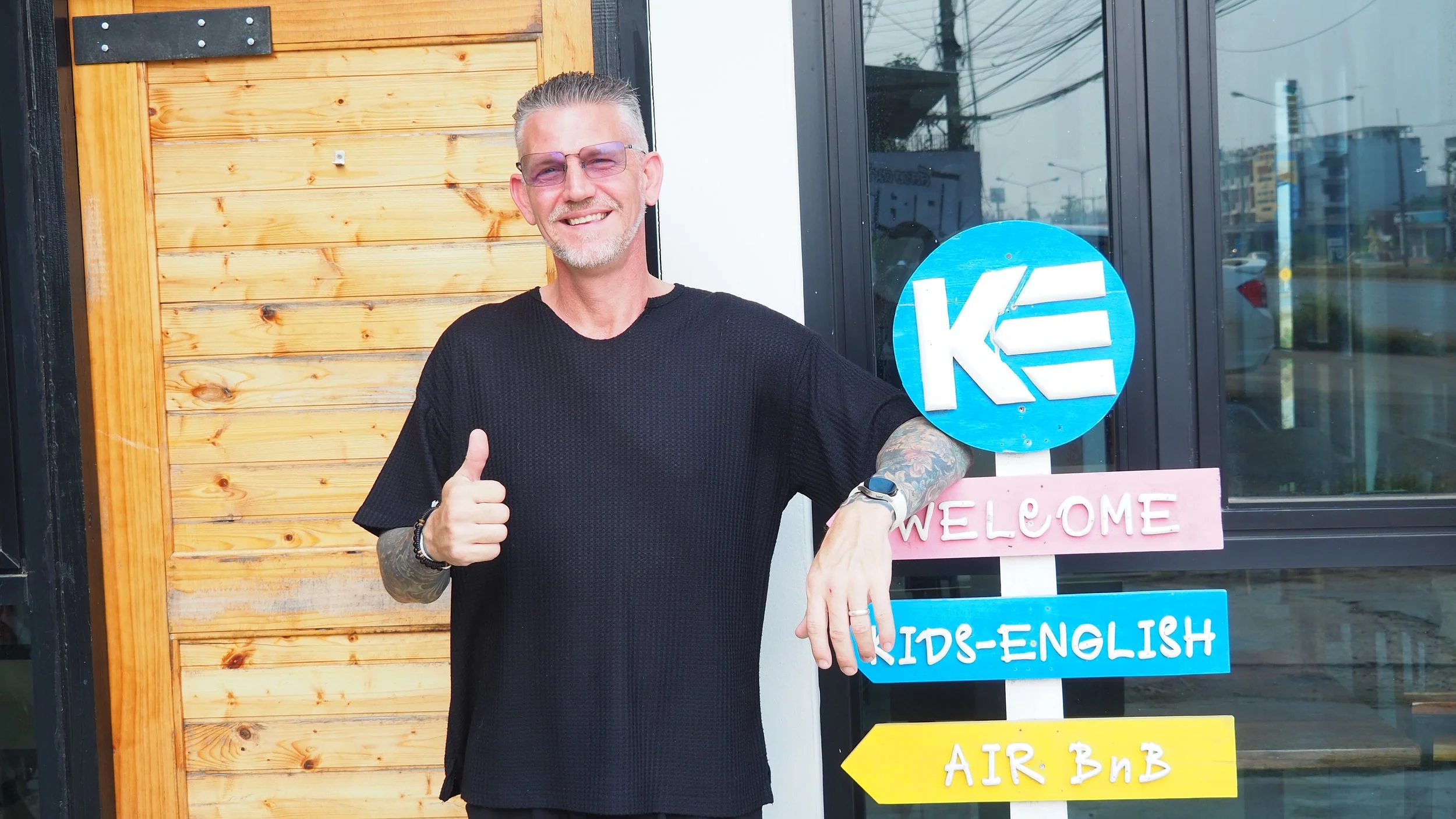
Matthew John
Co-Founder & Operations ManagerI'm Matthew, co-founder of Kids English Thailand. I've lived in Thailand for 20 years and work from our office in Ban Lum, Sukhothai. Since 2009 we have placed over 1,500 teachers in Thai schools, and I still learn something from my Thai colleagues every year.
