
Introduction to Thailand: Culture & More — KET
Introduction to Thailand:
Culture, Regions & Daily Life 🇹🇭🪷
Sawasdee from Ban Lum! Welcome to your primer on the Kingdom of Thailand — known in Thai as Prathet Thai ("Land of the Free"). Over my 20+ years living and working here — from my very first classroom in Chiang Rai to our Kids English Thailand headquarters in Sukhothai — I have watched hundreds of teachers fall in love with this country. Here is a clear, friendly look at Thailand's map, regions, seasons, history, and everyday manners.
What Makes Thailand Stand Out.
Where Thailand sits in Southeast Asia and the national symbols you will see outside every school gate.
1. Where Thailand Sits on the Map
Thailand borders Myanmar to the west and northwest, Laos to the northeast, Cambodia to the east, and Malaysia to the south. Covering 513,120 km² (roughly twice the land area of the UK), it serves as a founding member and central crossroads of ASEAN.
2. Never Colonized ("Land of the Free")
Unlike its neighbors in Southeast Asia, Thailand preserved its independence throughout the European colonial era. Known internationally as Siam until 1939, the country's Thai name — Prathet Thai — proudly translates to "Land of the Free."
3. The Five-Band Thai Flag
Every morning at 8:00 AM, students and teachers stand for the national anthem as the Thai flag is raised. Its five horizontal stripes carry three meanings: Red for the land and people, White for religion, and the wide center Blue band for the monarchy.
4. Theravada Buddhism & Diversity
The vast majority of Thai citizens practice Theravada Buddhism, which emphasizes mindfulness, merit-making, and kindness — symbolized by blooming lotus flowers in temple ponds. Thailand is also home to vibrant Muslim, Christian, hill-tribe, and Thai-Chinese communities.
5. The Thai Language & Script
Thai is a tonal language with its own distinctive script created in Sukhothai in 1283. Learning a few polite phrases and recognizing basic letters on menus and street signs is a huge everyday win — see our Thai Alphabet Guide.
6. Thai Baht & Buddhist Era
Thailand's currency is the Thai Baht (THB / ฿), and official school calendars use the Buddhist Era (B.E.), which sits 543 years ahead of the Western calendar (for example, 2026 is B.E. 2569).
Thailand's 4 Regions & Tropical Seasons.
From cool northern valleys and historic central plains to southern islands, each region offers a distinct lifestyle for teachers.
| Region of Thailand | Key Provinces & Hubs | Landscape & Lifestyle for Teachers |
|---|---|---|
| 1. Northern Thailand (Lanna) | Chiang Mai, Chiang Rai, Lampang, Lamphun, Nan | Forested mountains, cooler winter mornings, over 300 temples in Chiang Mai alone, and a relaxed, welcoming Lanna cultural pace. |
| 2. Central Thailand & Capital | Bangkok, Sukhothai, Phitsanulok, Ayutthaya, Phichit | The fertile Chao Phraya river basin — blending ancient royal capitals (like our home in Sukhothai) with the modern skyscrapers and transit of Bangkok. |
| 3. Northeast Thailand (Isan) | Khon Kaen, Udon Thani, Nakhon Ratchasima, Ubon | Expansive agricultural plateau bordering Laos and Cambodia. Famous for its authentic rural warmth, spicy Som Tam cuisine, and lively local festivals. |
| 4. Southern Thailand (Peninsula) | Phuket, Krabi, Surat Thani, Songkhla | Framed by the Andaman Sea to the west and the Gulf of Thailand to the east, featuring limestone karsts, palm-fringed islands, and coastal towns. |
1. The Green Monsoon Season
Coinciding with Semester 1, warm tropical showers refresh the afternoon air and turn rice paddies across Thailand bright emerald green. Keep a compact umbrella or light rain poncho in your school bag.
2. The Sunny & Cool Dry Season
During Semester 2, blue skies and lower humidity arrive across the country — bringing crisp, cool mornings to northern and heartland provinces like Chiang Mai, Lampang, and Sukhothai.
3. The Hot Summer & Songkran
Falling during the annual school summer vacation, temperatures climb into the mid-30s °C ahead of the nationwide Songkran New Year water festival in mid-April.
4. Dressing for Tropical Weather
Breathable cotton and linen collared shirts keep you comfortable in fan-cooled classrooms, while a light fleece or cardigan is essential for northern winter mornings and air-conditioned buses.
From Ancient Bronze to Modern Thailand.
Walking through Thailand means seeing ancient ruins and modern cities side by side. Here are the six key chapters that shaped the nation.
1. Ban Chiang & Early Roots
UNESCO-listed archaeological sites like Ban Chiang in northeast Thailand reveal continuous human habitation, painted red pottery, wet-rice farming, and bronze metallurgy dating back thousands of years.
2. The Sukhothai Kingdom
Known as the "Dawn of Happiness" (and home to our K.E.T. headquarters), Sukhothai established the foundations of the Thai alphabet under King Ramkhamhaeng, graceful lotus-bud stupas, and Theravada Buddhist art.
3. Lanna & Ayutthaya
While the Lanna Kingdom flourished in the northern mountains around Chiang Mai, the island capital of Ayutthaya grew into one of Asia's wealthiest international trading ports for over 400 years.
4. Thonburi & Rattanakosin
Following the fall of Ayutthaya, King Taksin reunified the country at Thonburi before King Rama I founded the Chakri Dynasty and established the new capital across the river in Bangkok (Rattanakosin) in 1782.
5. Diplomacy & Independence
Through the skilled diplomacy and modernization reforms of King Mongkut (Rama IV) and King Chulalongkorn (Rama V), Siam built railways, schools, and civil courts while remaining independent of European colonization.
6. Constitutional Monarchy
Siam transitioned to a constitutional monarchy in 1932 and was renamed Thailand in 1939. King Bhumibol Adulyadej (Rama IX) reigned for 70 years until 2016, followed by His Majesty King Maha Vajiralongkorn (Rama X).
Thai Etiquette for New Teachers.
Why Thailand is called the "Land of Smiles" and the six everyday habits that earn immediate respect in Thai schools and villages.
1. Say "Sawasdee" with a Smile
Sawasdee (accompanied by a polite khrap for men or kha for women) works for both "hello" and "goodbye." Paired with a warm smile and a gentle Thai Wai, it opens doors everywhere you go.
2. Head & Feet Manners
In Thai society, the head is regarded as the most sacred part of the body and the feet the lowest. Avoid patting students on the top of the head, and never point your feet at people or Buddha statues when sitting on the floor.
3. Gentle Communication
Thais value a "cool heart" (jai yen) and harmonious relationships. Speaking in a calm, patient tone — rather than raising your voice or firing off stressful questions — makes classroom management effortless. See our Communicating in Thailand guide.
4. Modest School & Temple Dress
Teachers hold respected community standing as Khun Kru. Wear neat collared shirts, tailored trousers, or knee-length skirts on campus, and slip off your shoes before entering temple halls or language labs. See our Teacher Dress Code.
5. The Anthem & Sacred Symbols
Stand respectfully when the national anthem plays at 8:00 AM school assembly (and 6:00 PM in public parks or train stations), and always treat royal portraits, Buddhist monks, and temple grounds with quiet dignity.
6. Shared Meals & School Events
Thai culture revolves around sanuk (finding joy together) and sharing food. Joining your Thai co-teachers for family-style lunches, sports days, and Wai Kru ceremonies is the fastest way to feel at home.
Frequently Asked Questions.
What does Prathet Thai mean and was Thailand ever colonized?
Prathet Thai translates to "Land of the Free." Formally known as the Kingdom of Thailand (Ratcha Anachak Thai) and historically called Siam until 1939, Thailand is the only country in Southeast Asia that was never colonized by a European power.
What do the three colors on the Thai national flag represent?
The Thai national flag (Thong Trairong) features five horizontal stripes in three colors: red stands for the land and people, white represents religion (primarily Theravada Buddhism), and the central blue band represents the monarchy.
How big is Thailand and what are its four main regions?
Thailand covers 513,120 square kilometers (roughly twice the size of the United Kingdom) with a population of over 66 million people. Its four primary geographical regions are Northern Thailand (mountains and historic cities like Chiang Mai), Northeast Thailand or Isan (the Khorat Plateau bordering Laos and Cambodia), Central Thailand (the Chao Phraya river plains, Sukhothai, Phitsanulok, and Bangkok), and Southern Thailand (the peninsula between the Andaman Sea and the Gulf of Thailand).
What are the main weather seasons in Thailand?
Thailand has a tropical climate shaped by two main periods: the green monsoon season from May to October, which brings refreshing rains and lush landscapes, and the sunny dry season from November to April, which starts with cool breezes in the north and warms into the hot April New Year period.
What are the most important etiquette rules for new teachers in Thailand?
Always keep a calm, friendly demeanor (jai yen), greet people with "Sawasdee" and a smile, never touch anyone (including children) on the top of the head, never point your feet at people or sacred statues, and dress modestly in classrooms and temples.
How can I apply to teach English in Thailand with Kids English Thailand?
Graduates with a bachelor's degree can apply online at kidsenglishthailand.org/apply-now for supported school placements across northern and central Thailand at a $0 placement fee to the teacher. Candidates without a degree can join our Volunteer & Residency pathway.
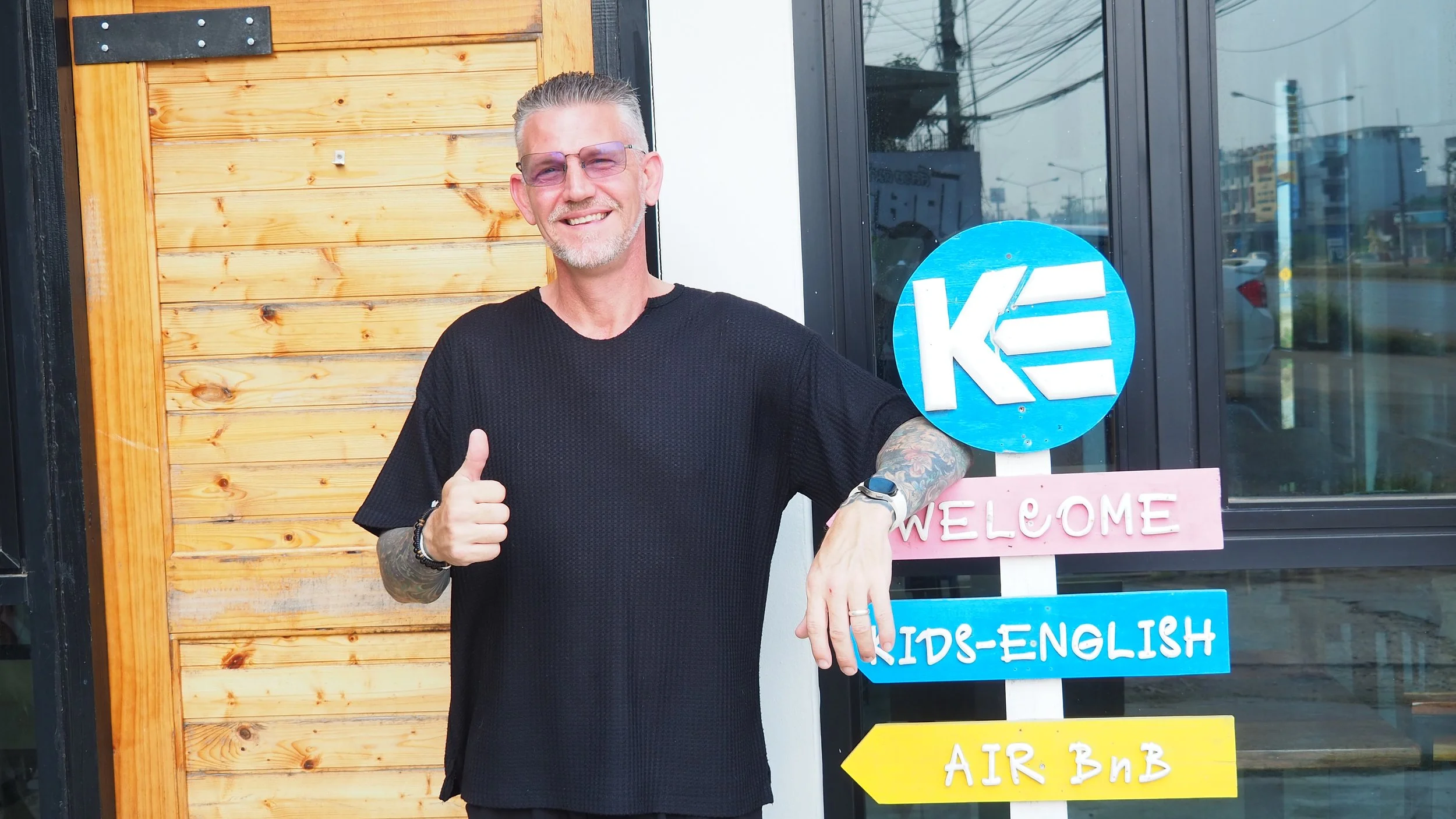
Written by Matthew John
Co-Founder & Operations Manager : 20+ Years in ThailandMatthew John is the co-founder of Kids English Thailand (K.E.T.) in Ban Lum, Sukhothai. Since his first teaching placement in Chiang Rai and founding K.E.T. in 2009, Matthew and our local family team have supported over 1,500 teachers across northern and central Thailand at a $0 placement fee to the teacher. Questions? Email matthew@kids-english.org.
