
Thai Bidet (“Bum Gun”): How Teachers Use It at School and Home
Test the Trigger. Keep the Bag Off the Floor
I've lived in Thailand for 20 years, and from our office in Ban Lum this is what I tell new teachers about the bathroom. Most of what you will meet is a handheld sprayer beside the toilet. Try it into the bowl first, pat dry with a little paper, and use the bin if there is a bin. Pocket tissues every day. It is a custom, and it is easy once you have done it a couple of times.
01: Water First, Then the Bin
How most Thai bathrooms work, in plain words.
"In 20 years here, almost every new teacher has a moment of surprise in the bathroom and then gets on with it. Test the trigger, keep your clothes clear, and carry tissues. That is nearly all there is to it."Matthew John : Co-Founder & Operations Manager, KET
Water First
In our experience the sprayer is used first to wash with water, and paper, if there is any, is used after to pat dry. It is a habit, not a rule. Do what is comfortable for you.
Follow the Bin and the Sign
Many schools and older buildings put a small bin beside the bowl for used paper. If there is a bin, use it. If a sign says paper can be flushed, follow the sign. If you are unsure, ask your school.
Read the Room
Some newer buildings do allow paper in the toilet, and they usually say so on a sign. Rules differ from place to place, so read the sign each time.
02: Bathrooms You May Meet
From an apartment to an older school block.
| Type | Set-up | Where You May See It | Notes |
|---|---|---|---|
| Toilet with a handheld sprayer | Sit-down bowl and a hose beside it | Homes, apartments, and many hotels, schools and public toilets | The usual set-up. Test the trigger into the bowl first. |
| School wet room | Tiled floor with a drain, a bowl or squat pan, and often a bin | Student and staff blocks at some schools | The floor is often wet. Keep your bag off it and watch your step. |
| Bucket and dipper | A water basin and a plastic dipper | Some older buildings and rural places | Wash with the dipper, then pour a few scoops into the bowl to flush. |
| Electronic toilet | A built-in nozzle, sometimes with a dryer | Some newer malls and airports | Rare in schools. Follow the buttons and any sign. |
A Note on School Toilets
Schools differ, and primary children use the toilets all day, so they are washed down often. Some school toilets have no paper or soap in the stall. Ask a Thai colleague which toilet the teachers use and what to bring. Every school is a little different.
03: Test the Trigger: Five Steps
Calm and in order.
🛠️ How to Use a Handheld Bidet Sprayer in Thailand
-
Test the Trigger Into the Bowl
Squeeze the trigger gently into the toilet bowl first to check the pressure. Some sprayers are gentle and some are strong, so start light.
-
Keep Your Clothes Clear
Lean slightly forward and hold your trousers or skirt forward, away from the water.
-
Use a Gentle Stream
Use light pressure and keep the nozzle low so the water runs down into the bowl.
-
Pat Dry and Use the Bin
Use a little tissue to pat dry. If there is a bin beside the toilet, put the used paper in the bin and follow any sign in the stall.
-
Wash Your Hands
Wash your hands with soap at the sink. If there is no soap, use your own hand sanitizer.
The Wet-Room Floor
Floors are often wet, so keep your bag off the floor. Hang it on a hook if there is one, or keep it on your lap. Zip your phone into a pocket so it stays put when you bend down. Shoes on in school toilets is the usual habit, so do as your colleagues do.
Warm Water and Pressure
On a hot day the water in an exposed pipe can be warm, so run the trigger into the bowl for a couple of seconds first. Pressure varies from building to building, so start light. At home there is often a small tap on the water line behind the toilet. If you rent, ask your landlord before you change anything.
04: Tissues, Soap and Hands
What to carry in your school bag.
Pocket Tissues
Some school toilets have no paper in the stall. Keep a small pack of tissues in your bag or your desk so you are never caught out between classes.
Hand Sanitizer
Some sinks run out of soap on a busy day. A small bottle of hand sanitizer in your bag covers you until you can wash with soap.
Left and Right Hand
It is a custom, not a rule and not a lecture. In Thai custom the left hand is often the one used for washing, and the right hand is for eating and passing things. What matters most is washing your hands with soap afterwards.
Not a Clinic
KET is a placement agency, not a clinic, and this page is everyday habit, not medical advice. For health questions, see our travel health guide and our drinking water guide. If you or someone with you is seriously unwell, see our emergency numbers page.
Bidet Sprayer Questions
Short answers from what we see. Customs vary, so follow the sign and ask your school.
Do people use the bidet sprayer or toilet paper first in Thailand?
Can you flush toilet paper down the toilet in Thailand?
What should I do if a school or public restroom has no toilet paper or soap?
How do you control the water pressure on a Thai bidet sprayer?
What should I expect in a wet-room or bucket-flush bathroom?
Is there a hand custom I should know about?
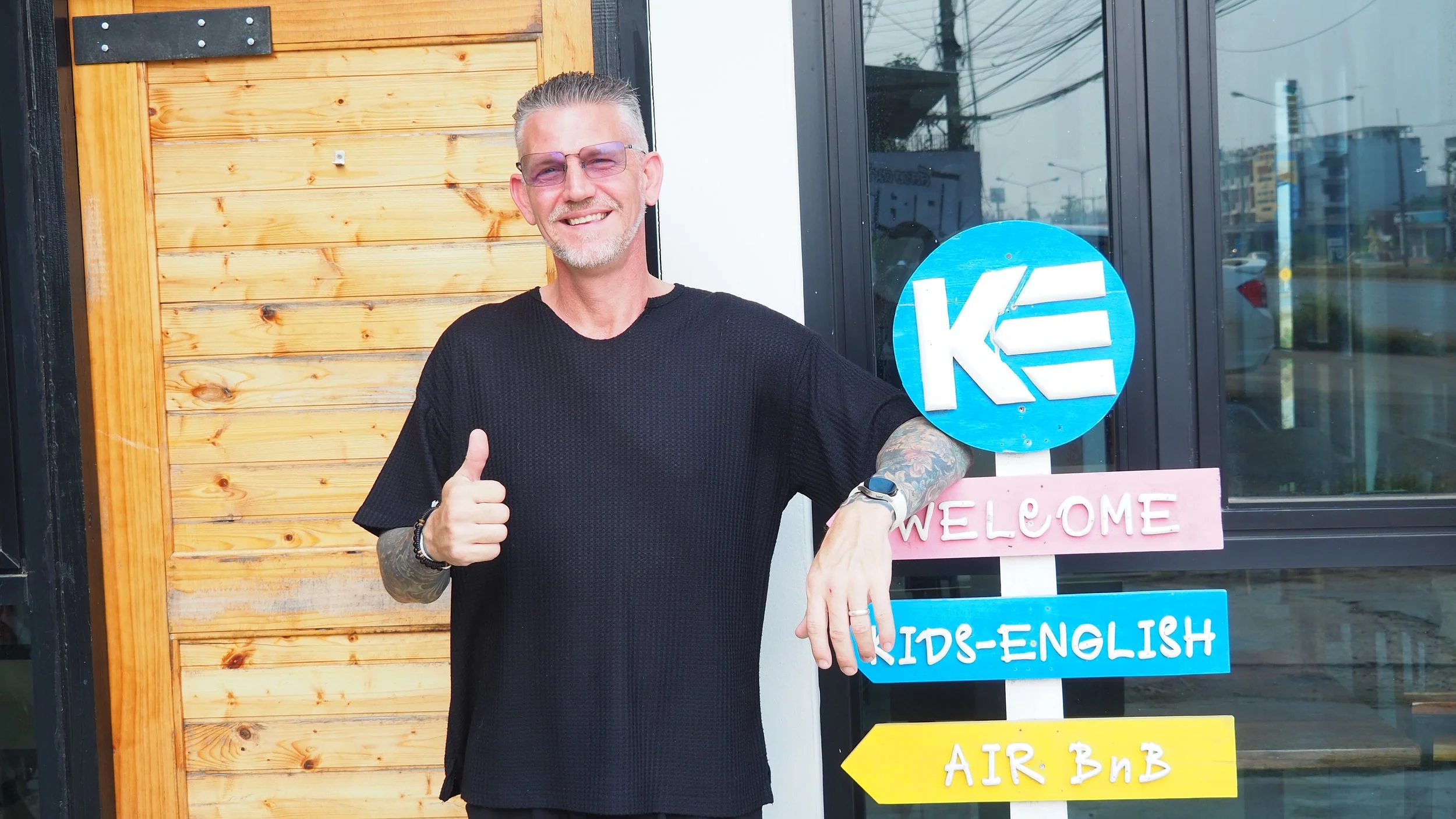
Written by Matthew John
Co-Founder & Operations ManagerI'm Matthew, co-founder of Kids English Thailand. I've lived in Thailand for 20 years and work from our office in Ban Lum, Sukhothai. Since 2009 we have placed over 1,500 teachers in Thai schools. I'm not a doctor, so for health questions please see a clinic.
