
Apartments in Thailand for Teachers: Deposit, Electricity, What to Check
First Month Plus Deposit. Test the Air-Con. Photograph the Chips
I've lived in Thailand for 20 years, and from our office in Ban Lum I give new teachers the same advice about renting: see the room first, get the electric rate in writing, and photograph the walls on move-in day. Rents and deposits vary by landlord, so confirm prices on the ground.
See the room before you pay. Landlords usually ask for your passport and the money upfront, often the first month plus 1 to 2 months deposit, but that varies by landlord. Get the electric rate in writing: some places charge the meter rate and some add a markup per unit. Photograph the walls on move-in day. In school towns your school or the KET team may help with a first room. In Bangkok you view places yourself. Rents change, so confirm prices on the ground.
01: Renting as a Teacher
Simple, if you see it first.
"In 20 years here, the teachers who have the fewest problems with a room are the ones who went and looked at it. Take your time, ask questions, and don't pay for a room you haven't seen."Matthew John : Co-Founder & Operations Manager, KET
Passport and Deposit 📋
Landlords usually ask to see your passport and take money upfront, often the first month plus a deposit of 1 to 2 months. It varies by landlord, so ask before you go. Lease length and terms are up to the landlord and the school.
Furnished or Not 🛏️
Many rooms come with a bed and basic furniture, but not all do. Ask exactly what is in the room and have it written down.
Help in School Towns 🏫
In school towns like Sukhothai, your school or the KET team may help you find a first room. Ask, don't assume. KET is a placement agency, not a landlord or estate agent. More at Teaching in Thailand.
02: Room Types and Prices
Confirm prices on the ground.
Studio 🏢
A studio is usually one room with a bathroom. It is easy to keep clean. Many cheap studios have no kitchen, so ask what is allowed.
One Bedroom 🛋️
A one-bedroom has a separate bedroom, and some buildings have shared facilities like a pool or a gym. Ask what is included in the price.
Towns and Prices 📍
Prices depend on the town, the building and the air-con. I don't give numbers because they change and differ by landlord. Confirm prices on the ground and ask your co-teachers what people pay.
Bangkok 🚆
In Bangkok you usually view places yourself. Being close to a BTS or MRT station can change the price. See the room, and ask about the commute.
03: Electricity, Water and Kitchens
Ask how it is billed. Get it in writing.
Meter vs Markup ⚡
In some condos the electricity is charged at the meter rate. In some buildings the landlord adds a markup per unit. Ask which one applies and get the rate per unit in writing before you sign. I don't quote rates because they change.
Get the rate in writingWater 💧
Water is usually cheap, but ask how it is billed. For drinking water, see Drinking Water in Thailand.
Ask how it is billedNo Kitchen? 🍳
Many budget studios have no kitchen, and eating out is easy in most towns. If you want to cook, ask if a kettle or small rice cooker is allowed. See Thai Food for what to eat, and TagThai Easy Pay for paying in shops.
04: See the Room, Photo the Walls
Before you pay, and on move-in day.
Test the Air-Con ❄️
Turn it on during the viewing. Listen for rattles and look for water leaks around the unit. Give it a few minutes to see if it cools.
Test Water and Heater 🚿
Turn on the shower and the taps. Check the water pressure and see if the water heater works.
Locks, Damp and Mould 🔒
Check the door and window locks. Look in the corners, the bathroom and near the air-con for damp or mould.
Photograph the Chips 📸
On move-in day, photograph the walls, floor, furniture and any chips or scratches, and send the photos to the landlord. Moving in? See our TM.30 guide for the address report.
05: Five Steps to Rent a Room
Short and simple.
🛠️ How to Rent an Apartment in Thailand as a Teacher
-
Pick a Place Near School
Choose somewhere within easy reach of your school. In a school town, ask your school or KET team what help is on offer. In Bangkok you view places yourself.
-
See the Room First
Visit before you pay anything. Test the air-con and the water, check the door and window locks, and look for damp or mould in the corners.
-
Get the Electric Rate in Writing
Ask whether electricity is charged at the meter rate or with a landlord markup per unit, and have the rate written down.
-
Check the Deposit Terms
Bring your passport and ask what the landlord wants. Deposits are often first month plus 1 to 2 months, but they vary, so get the return terms in writing.
-
Photograph the Walls
On move-in day, photograph the walls, floor, furniture and any chips or scratches, and send the photos to the landlord.
Deposit rules and rates vary by landlord. Get everything in writing, and remember that lease terms are the landlord's and your school's call.
Renting a Room Questions
How much does an apartment cost for a teacher in Thailand?
It depends on the town, the building and the air-con. I don't list rents here because they change and differ by landlord, so confirm prices on the ground. Ask your school or co-teachers what people in your town pay.
What do I need to rent a room?
Landlords usually ask for your passport and the money upfront, often the first month plus a deposit of 1 to 2 months. That varies by landlord, so ask before you turn up. Always see the room before you pay.
How does electricity work in a rental?
In some condos the electricity is charged at the meter rate. In some buildings the landlord adds a markup per unit. Ask which one applies and get the rate in writing before you sign. Water is usually cheap, but ask how it is billed.
Why do many cheap studios have no kitchen?
Many budget studios are just a room and a bathroom, and eating out is easy in most towns. If you want to cook, ask the landlord whether a kettle or a small rice cooker is allowed.
Will my school or KET find me a room?
In school towns like Sukhothai, your school or the KET team may help you find a first room, but ask, don't assume. In Bangkok you usually view places yourself. KET is a placement agency, not a landlord or estate agent.
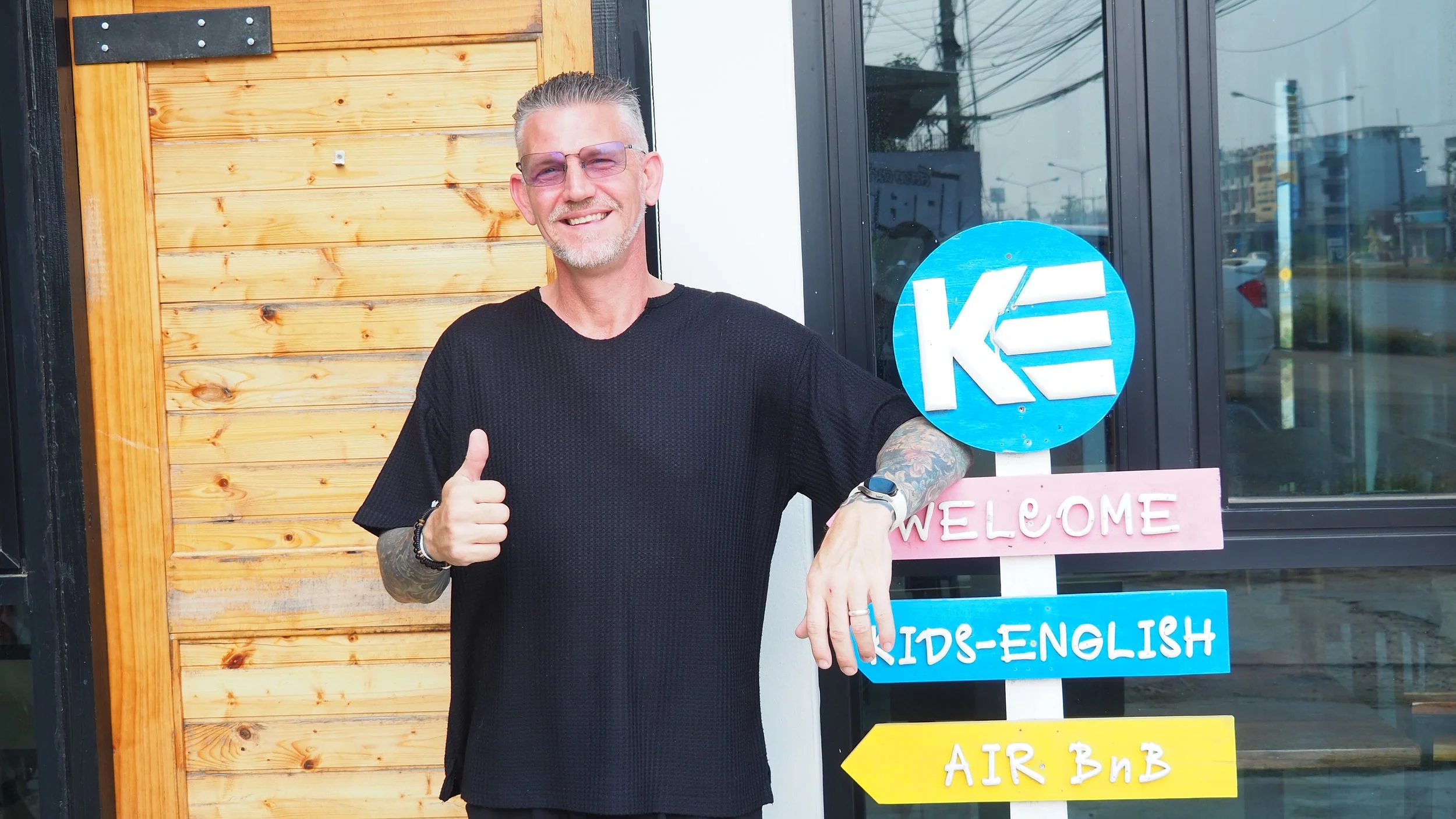
Matthew John
Co-Founder & Operations ManagerI'm Matthew, co-founder of Kids English Thailand. I've lived in Thailand for 20 years and work from our office in Ban Lum, Sukhothai. Since 2009 we have placed over 1,500 teachers in Thai schools, and I still learn something from my Thai colleagues every year.
