
Thai Culture for Teachers: Wai, Jai Yen, Sanuk, and School Days
Cool Heart. Covered Shoulders. Never Point Your Feet
I've lived in Thailand for 20 years, and from our office in Ban Lum I give new teachers the same advice: watch first, then join in. Stay calm, correct a child privately, and ask your Thai co-teacher when you're unsure. These are customs, not laws.
Watch first, correct privately. Students wai you first, and you smile and nod. Keep a cool heart (jai yen, ใจเย็น), cover your shoulders, and take your shoes off if the staff do. Don't point your feet. Wai Khru (ไหว้ครู) is the flower-tray ceremony, usually in June, and your school sets the date. Wan Kru (วันครู) is Teachers' Day on 16 January. These are customs, not laws, and your school decides. Make lessons fun (sanuk, สนุก) without shouting.
01: Why Culture Matters in Class
Small habits build trust.
"In 20 years here, the teachers who settle in fastest are not the ones who know the most rules. They watch first. They greet people kindly, stay calm when something goes wrong, and ask their Thai co-teacher before they guess."Matthew John : Co-Founder & Operations Manager, KET
Colleague Harmony 🤝
Thai staffrooms value calm, polite relationships. A greeting, a title and a smile help you work with your homeroom co-teacher, department head and office staff.
Kids Feel Safe 🏫
Children speak more English when they are not afraid of being embarrassed. How you correct them matters as much as what you teach.
Life Outside School 🌿
Morning markets, sports days and temple visits are part of school life. Go, watch, and join in quietly. It helps you settle in Sukhothai, Phitsanulok and beyond.
03: What Happens at School
Assemblies, ceremonies, dress and shoes.
Wai Khru Ceremony 🌺
Wai Khru (พิธีไหว้ครู) is the ceremony where students present flower trays (phan wai khru) to their teachers. It is usually in June, and your school sets the date. You may be invited to sit with the Thai staff. Ask what to wear and where to sit. Full details in Wai Kru Day in Thailand.
Date set by your schoolWan Kru: Teachers' Day 🎓
Wan Kru (วันครู) is a different day: Teachers' Day on 16 January. Many schools give students the day off, so check with yours. Wai Khru and Wan Kru are not the same event.
16 JanuaryMorning Assembly 🇹🇭
Many schools hold a morning assembly with the national anthem, a prayer and notices, often around 8:00. Stand calmly with your class until it finishes. Times vary by school.
Covered Shoulders 👔
Most schools expect neat, modest clothes with the shoulders covered. Your school sets the rules, so check the staff memo or ask your co-teacher. More in Thailand Teacher Dress Code.
Shoes Off if Staff Do 👟
If there are shoe racks at the door and your colleagues take their shoes off, do the same. It keeps the floors clean. Not every building does this, so watch first.
04: Head, Feet and Respect
Customs linked to Buddhism and the monarchy.
The Head 🧠
In Thai custom the head is the highest part of the body. Avoid touching anyone on the head, including children, and avoid passing things over someone's head.
The Feet 🦶
The feet are the lowest part. Avoid pointing your feet or shoe soles at people, monks or Buddha images, and don't use your feet to point at things. If you're unsure, sit with your feet tucked in.
The Monarchy 👑
The monarchy is held in very high regard. Don't joke about it or comment on it, online or in class. Follow your Thai colleagues' lead.
05: Festivals: School Versions
Usually calmer than the street parties.
Songkran at School 💦
Songkran is in April. School events are often gentle: students may pour scented water over the hands of elders and teachers as a blessing. The big street water fights are a different thing. Regional dates are in Festivals in Thailand.
Loy Krathong at School 🪷
Loy Krathong is on the full moon of the twelfth lunar month, usually in November. Schools often make leaf and flower baskets (krathong) and float them on a pond or canal. See the Loy Krathong festival.
06: Managing the Room: Correct Privately, Sanuk
Calm, kind and fun.
Correct Privately 🗣️
If a student misbehaves or struggles, speak quietly at their desk, not in front of the class. It keeps them from feeling embarrassed and keeps them talking to you.
Claps, Not Shouting 👏
Shouting can hurt your rapport. Try a clap pattern, a countdown or team points on the board, and work with your Thai co-teacher.
Sanuk: Keep It Fun 🎈
Sanuk (สนุก) means fun. Short warm-ups, movement games and partner challenges keep kids smiling. Ideas are in Online Resources and ESL Games.
07: Food: Sharing Meals
Staffroom lunches are often shared.
Shared Plates 🍲
Staffroom lunches are often shared. Colleagues order several dishes and share them with rice. Join in and say thank you.
Fork and Spoon 🥄
Many people eat with the spoon in the dominant hand and use the fork to push food onto it. Chopsticks are mainly for noodle soups. Copy what your colleagues do.
Small Portions 🍛
From a shared dish, take a spoonful or two at a time, using the serving spoon (chon klang, ช้อนกลาง) if there is one. More in Thai Food.
08: Four Steps for Teachers
Short and simple.
🛠️ How to Fit Into Thai School Culture
-
Learn the Wai and seniority titles
Return the wai from colleagues and elders, and use titles like Ajarn, Khru, Phee and Nong. Watch what your Thai co-teachers do first.
-
Correct Privately and Keep a Cool Heart
Speak to a student quietly, not in front of the class, and keep your voice calm (jai yen). Sanuk beats shouting.
-
Follow the School on Dress, Shoes and Ceremonies
Cover your shoulders, take your shoes off where staff do, and stand quietly at assemblies and at Wai Khru. Ask your co-teacher if unsure.
-
Join Festivals Quietly
Take part in school Songkran and Loy Krathong activities gently. School versions are calmer than the street parties.
Thai School Culture Questions
Why does Thai school culture matter for a foreign teacher?
Small habits build trust with colleagues and students. Watch first, follow your Thai co-teachers, and ask when you are unsure. These are customs, not laws, and every school is a little different.
How do I use the wai at school?
Students wai you first. Smile and nod, or give a light wai back. Do not wai primary children first. Service staff often wai first and a smile is enough. If your hands are full or you are riding, a nod is fine. The wai heights are a rough sketch, not a test.
What should I wear to teach in Thailand?
Most schools expect neat, modest clothes with the shoulders covered. Your school sets the rules, so ask your co-teacher and check the staff memo. Our dress code post has more.
What does “correct privately” mean?
Speak to a student quietly at their desk instead of in front of the class. It keeps them from feeling embarrassed and keeps them talking to you. Stay calm, with a cool heart (jai yen).
Do I take my shoes off in the classroom?
If there are shoe racks at the door and your colleagues take their shoes off, do the same. If nobody does, follow the school. It is a custom, not a rule for every building.
Is Wai Khru the same as Teachers’ Day?
No. Wai Khru is the flower-tray ceremony, usually in June, and your school sets the date. Wan Khru (often written Wan Kru) is Teachers’ Day on 16 January, and many schools give students the day off, so check with yours.
Is it rude to point my feet at someone?
It is considered impolite. In Thai custom the feet are the lowest part of the body, so avoid pointing your feet or shoe soles at people or at Buddha images, and do not use your feet to point at things. If you are not sure, sit so your feet are tucked in.
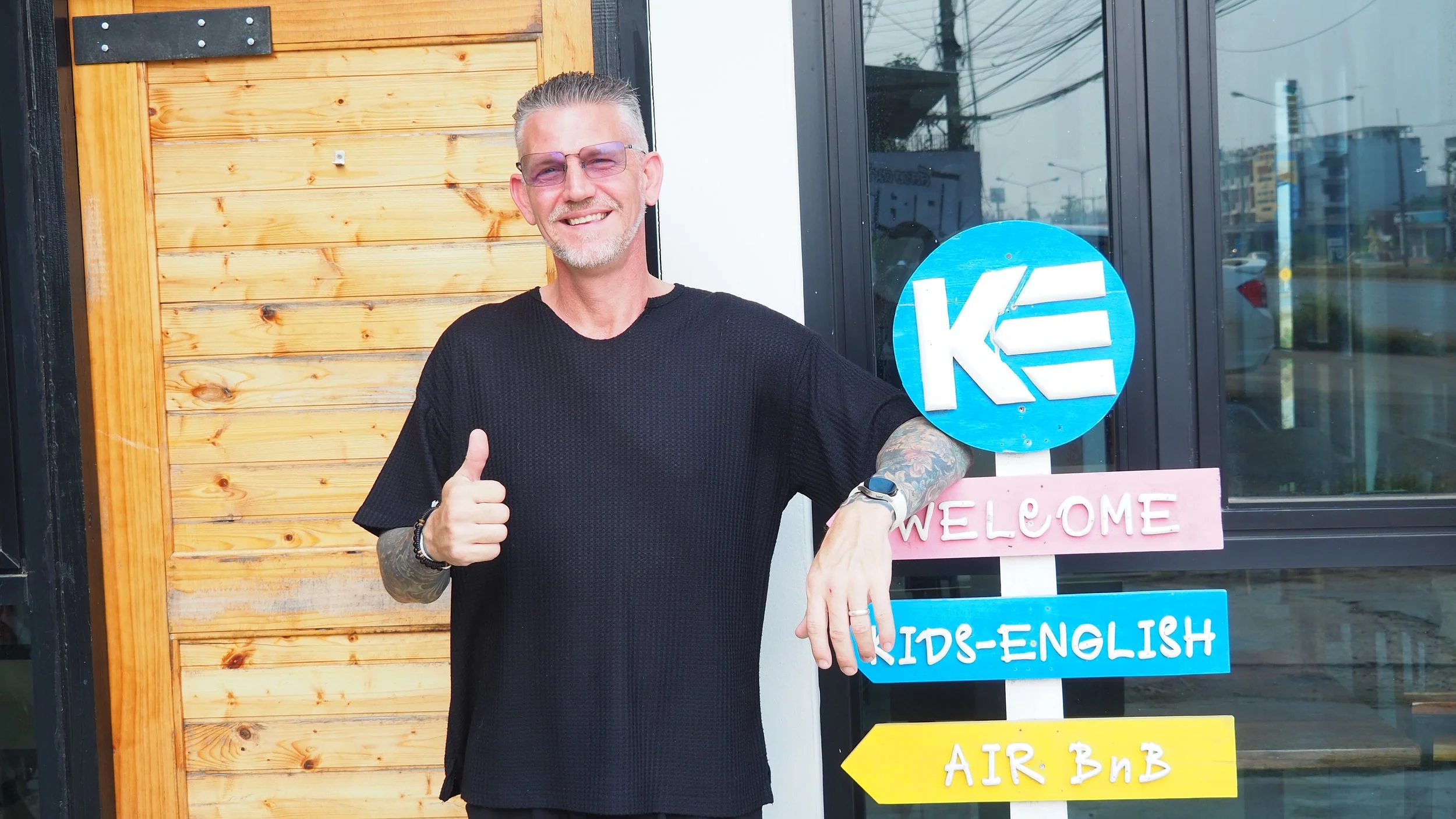
Matthew John
Co-Founder & Operations ManagerI'm Matthew, co-founder of Kids English Thailand. I've lived in Thailand for 20 years and work from our office in Ban Lum, Sukhothai. Since 2009 we have placed over 1,500 teachers in Thai schools, and I still learn something from my Thai colleagues every year.
