
Interesting Facts About Thailand: Guide — KET
Interesting Facts About Thailand: Traditions, History & Daily Life 🇹🇭
Having lived in Thailand for over 20 years, I am constantly reminded of how unique this country is. From its sovereign, uncolonized heritage and 543-year Buddhist calendar to digital payment convenience and remarkable biodiversity, Thailand offers an inspiring blend of deep tradition and forward-looking energy.
Thailand (Prathet Thai - Land of the Free) is the only nation in Southeast Asia never colonized by a European power. Daily life seamlessly pairs centuries of spiritual tradition (thousands of temples and a calendar set 543 years ahead to BE 2569) with modern infrastructure. Thailand is recognized as a major regional EV manufacturing and sales market in ASEAN, while PromptPay QR payments are widespread across markets and stores, existing alongside reliable cash transactions. The country also holds records for Bangkok's poetic ceremonial name and natural wonders like Kanchanaburi's tiny 2-gram bumblebee bat.
01: Uncolonized Independence & Regional Tech Hub
How centuries of sovereignty paved the way for Thailand's dynamic modern culture.
"Over two decades coordinating foreign educators across Thai schools, I have watched foreign teachers arrive expecting a sleepy postcard scene, only to discover a welcoming society that honors its royal traditions while rapidly embracing the digital future. You can pay for a 45 THB noodle lunch via a quick phone QR scan, then step inside an ancient temple complex dating back hundreds of years."Matthew John : KET Operations Manager & 20-Year Veteran
Land of the Free (Prathet Thai) 👑
Thailand is the only Southeast Asian nation never colonized by European powers. Skilled diplomatic stewardship by King Chulalongkorn (Rama V) and King Mongkut (Rama IV) preserved sovereignty, giving the country its name: Prathet Thai.
Major ASEAN EV Maker & Market ⚡
Thailand has grown into a leading electric vehicle manufacturing and sales hub in Southeast Asia, with international carmakers investing in facilities that produce electric buses, passenger cars, and delivery vehicles.
PromptPay QR & Cash Balance 📱
Thailand's national PromptPay system allows effortless bank app QR scanning at restaurants, transit counters, and street stalls alike. While electronic payments are convenient, physical cash remains widely accepted and reliable everywhere.
02: Bangkok's Ceremonial Name & Urban Life
The poetic, historic title of the capital city alongside its modern transport networks.
📜 The Full Ceremonial Name of Bangkok:
กรุงเทพมหานคร อมรรัตนโกสินทร์ มหินทรายุธยา มหาดิลกภพ นพรัตนราชธานีบูรีรมย์ อุดมราชนิเวศน์มหาสถาน อมรพิมานอวตารสถิต สักกะทัตติยวิษณุกรรมประสิทธิ์
"Krung Thep Mahanakhon Amon Rattanakosin Mahinthara Yuthaya Mahadilok Phop Noppharat Ratchathani Burirom Udomratchaniwet Mahasathan Amon Piman Awatan Sathit Sakkathattiya Witsanukam Prasit"
Rough Meaning: "City of angels, great city of immortals, magnificent city of the nine gems, seat of the king, city of royal palaces, home of gods incarnate, built by Visvakarman at Indra's command." In conversational Thai, locals simply call their city Krung Thep.
Historic Canals (Khlongs)
Bangkok was historically built around a vast network of waterways, inspiring the historic nickname "Venice of the East." Express passenger boats along the Chao Phraya River and Khlong Saen Saep continue to serve commuters today.
Krung Thep Aphiwat Terminal
Bangkok hosts Krung Thep Aphiwat Central Terminal, a massive transit station unifying long-distance rail lines, commuter routes, and future regional high-speed rail connections across the country.
03: The 543-Year Calendar Difference & Sacred Heritage
Understanding dates in Thailand through the Buddhist Era calendar.
📅 Understanding BE 2569
Thailand officially operates on the Buddhist Era (BE) calendar, counted from the passing into Parinirvana of Gautama Buddha: 543 years prior to the Gregorian calendar. To convert a Western calendar year, simply add 543: 2026 AD corresponds to BE 2569 in Thailand. Expiration dates on groceries, school calendars, and official government papers routinely display the BE year.
Calculation: Western Year + 543 = BE Year⚜️ Over 35,000 Temples Nationwide
Buddhist culture is interwoven with everyday life in Thailand. Wats serve as community gathering places, educational grounds, and festival centers. One celebrated treasure is Bangkok's Wat Traimit, which houses the world's largest solid gold Buddha image, concealed under plaster for centuries before its accidental rediscovery.
Cultural Heritage: Daily Community TiesWhat is my Thai Buddhist Era year?
Add 543 to your Gregorian birth year. 2026 is BE 2569.
This year (2026) is BE 2569
Songkran in mid-April is Thai New Year for celebrations. Civil papers still use January to December plus 543.
04: Cultural Customs & Everyday Practices
Insightful social practices and etiquettes that foreign educators encounter daily.
Treat Currency with Dignity
Thai Baht banknotes and coins carry the image of His Majesty the King. Because feet are culturally regarded as the lowest physical point of the body, using your foot to pin down a dropped coin or note is considered deeply disrespectful.
Affectionate Nicknames (Chue Len)
Thai children typically receive a short informal nickname (*Chue Len*) at birth. These names often refer to animals, food, or words like Nok (Bird), Pla (Fish), Bank, or Apple, and are used throughout life by family and colleagues.
Daily National Anthem Observance
At 8:00 AM and 6:00 PM each day, the Thai National Anthem plays over loudspeakers in train stations, schoolyards, and public areas. People pause calmly until the music ends as a shared display of civic respect.
The Polite Wai Greeting
The traditional greeting involves pressing your palms together with a gentle bow. For proper hand heights when greeting colleagues or elders, explore our guide on the importance of the Wai.
05: Distinctive Festivals & Global Origins
Lopburi's monkey feasts, the story of Red Bull, and rare wildlife.
Lopburi Monkey Buffet Festival
Held each year in late November in Lopburi province, local residents set out thousands of kilograms of fresh tropical fruits, vegetables, and treats as a festive banquet for the local macaque monkeys around San Phra Kan shrine.
Red Bull's Thai Heritage (Krating Daeng)
The global energy drink brand began in Thailand. Formulated in 1976 by Chaleo Yoovidhya as Krating Daeng (Red Gaur), Austrian businessman Dietrich Mateschitz later partnered with him to market the adapted beverage internationally.
Kitti's Hog-Nosed Bumblebee Bat
Western Thailand's Kanchanaburi province is home to the Kitti's hog-nosed bat, widely recognized as the world's smallest mammal. Weighing roughly 2 grams, it lives in limestone cave roosts near the Khwae Noi River.
06: Regional Thai Flavors & Everyday Dining
Balancing salty, sweet, sour, and spicy in school towns and morning markets.
🍜 Celebrated Regional Specialties
From Northern Thailand's creamy curry egg noodle soup (Khao Soi) to central Pad Thai, fiery Som Tam (green papaya salad), and aromatic Tom Yum, Thai cuisine balances fresh herbs, lime, and chilies. To explore regional dishes further, read our guide on classic Thai food essentials.
Flavors: Sweet, Sour, Salty, Spicy🍲 Fresh Cooking at Morning Markets
Markets across Thailand prepare food fresh to order over high heat, offering hot soups, grilled skewers, and fresh tropical fruit. Popular stalls with steady local crowds are the most reliable spots for tasty, affordable everyday meals.
Local Dining: Fresh, Active & SociableFrequently Asked Questions.
01. How do I convert my birth year to the Thai calendar?
Add 543 to your Gregorian birth year. Someone born in 1990 is BE 2533.
02. What is the most notable historical fact about Thailand?
Thailand (formerly Siam) is the only country in Southeast Asia that was never colonized by a European power. Its local name 'Prathet Thai' translates directly to 'Land of the Free'.
03. Why is the Thai calendar 543 years ahead of the Western year?
Thailand officially uses the Buddhist Era (BE) calendar, which begins 543 years before the Western Gregorian calendar to mark the year of Gautama Buddha's Parinirvana. Adding 543 to 2026 gives the year BE 2569.
04. What is Bangkok's full ceremonial name?
Bangkok's full ceremonial title is: 'Krung Thep Mahanakhon Amon Rattanakosin Mahinthara Yuthaya Mahadilok Phop Noppharat Ratchathani Burirom Udomratchaniwet Mahasathan Amon Piman Awatan Sathit Sakkathattiya Witsanukam Prasit'. In daily speech, Thai people simply say 'Krung Thep'.
05. Did Red Bull originate in Thailand?
Yes. Red Bull was created in Thailand in 1976 by Chaleo Yoovidhya as 'Krating Daeng' (Red Gaur). Austrian businessman Dietrich Mateschitz partnered with Yoovidhya to adapt the recipe into the global brand known today.
06. Why is stepping on Thai currency considered disrespectful?
Thai currency (both coins and banknotes) features the portrait of His Majesty the King. In Thai cultural etiquette, the feet are regarded as the lowest physical part of the body, so using a foot to pin down money is seen as deeply disrespectful.
07. What is the world's smallest mammal native to Thailand?
The Kitti's hog-nosed bat (also known as the bumblebee bat) lives in limestone caves within Western Thailand's Kanchanaburi province. It weighs roughly 2 grams and measures about 3 centimeters in length.
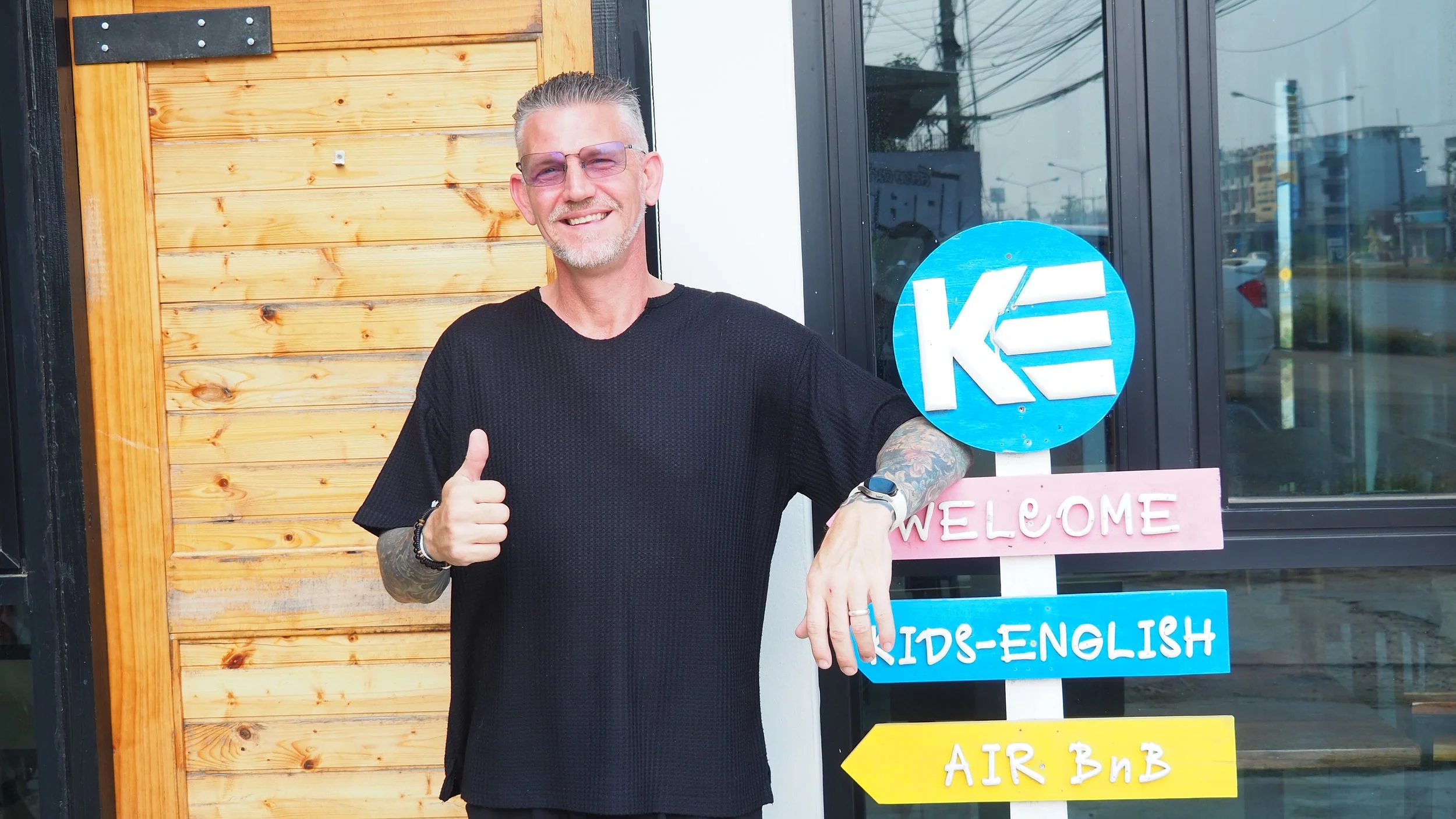
Matthew John
Co-Founder & Operations Manager : 20-Year VeteranMatthew John is the co-founder of Kids English Thailand (KET) with 20 years of continuous on-the-ground experience in Thai educational management. Matthew guides teachers through community orientation, school placement support, and cultural connection across Thailand.
