
Drinking Water in Thailand: What’s Safe for Teachers
Do Not Drink the Tap.
Tube Ice Is Usually Factory Ice
From our office in Ban Lum, this is what we tell every new teacher about water: don't drink the tap, buy sealed bottles or fill up at a coin refill machine, and don't worry about the tube ice in your iced coffee. It's an easy routine once you know it.
01: Why Not the Tap? Pipes and Tanks
The water may leave the plant clean. The problem is the trip to your glass.
"In 20 years of settling teachers into Thailand, water is one of the easiest routines to get right. Buy sealed bottles or use a clean refill machine, spit when you brush, and don't lose sleep over the tube ice in your iced coffee. The mistakes I see are drinking straight from the tap in an old building or a village house, and trusting a rusty refill machine."Matthew John : Co-Founder & Operations Manager, KET
Treatment Plants 🏭
In Bangkok and the bigger towns, water leaves the treatment plant treated. That doesn't tell you what comes out of the tap in your building.
Pipes and Rooftop Tanks 🚰
Old pipes can crack, and building tanks and rooftop drums aren't always cleaned regularly, so dirt and germs can get back in on the way to your tap.
Villages and Islands 🌿
In rural areas and on islands, tap water may come from wells, rainwater or small local systems, and quality varies. Don't drink it straight from the tap.
02: Brushing Your Teeth and Ice
The morning routine, iced coffee and the market.
Don't Drink the Tap
Don't drink tap water as a habit. Boiling it kills germs, so it's fine for tea and cooking, but it doesn't take out sediment or anything dissolved in it.
Brushing Your Teeth
In big cities like Bangkok and Chiang Mai, most people brush with tap water and spit it out. In rural areas and on islands, rinse with bottled water, especially in your first weeks.
Tube Ice
Tube ice (น้ำแข็งหลอด, nam khaeng lot, the cylinders with a hole in the middle) and machine cubes are commonly treated factory ice, and most people have them in drinks. Still use sealed bottles for drinking water, and skip ice chipped off big blocks.
Pick the busy stall cooking to order, but remember a busy hot wok with a queue is not a health certificate. Drinks from a sealed bottle or can are the safe bet. More in our Thai food post.
03: Bottled Water: Brands and Prices
Sold in every 7-Eleven and village shop.
🏷️ Common Brands
Singha, Crystal and Chang are common examples, and there are plenty of local brands. Sealed drinking water sold in Thailand carries a Thai FDA (อย.) number on the label.
🏪 Prices (Examples)
As an example, a 1.5-litre bottle has been around 10 to 20 THB in a convenience store, and six-packs work out cheaper per bottle. Prices vary by shop and town, so confirm that week.
04: Coin Refill Machines: Often Around 1 THB a Litre 🪙
Cheap, less plastic, and on most town streets.
🛠️ How to Use a Coin Reverse Osmosis (RO) Machine
-
Check the Machine
Pick a machine that looks clean and cared for, with a clean nozzle. If it looks rusty, dirty or broken, buy bottled water instead.
-
Use a Clean Bottle
Hold a clean reusable bottle or a 5-litre jug under the nozzle, without letting the bottle touch it.
-
Put In Coins
Put in coins. The sticker on the machine shows the rate; as an example, many charge around 1 baht a litre.
-
Fill, Cap and Store
Press start, stop when the bottle is full, cap it tightly and keep it out of direct sun.
Coin refill machines are common in towns and cities but not in every village. If a machine looks rusty, dirty or broken, buy bottled water instead. Many apartments also have a local shop that delivers big 18.9-litre bottles for a water dispenser; ask your landlord or school.
05: At Home, and If Your Stomach Goes
Simple habits. We're not doctors, so see a clinic for anything that doesn't settle.
Filters at Home
Some teachers buy a tap filter or a filter jug to improve the taste of water for cooking and tea. Check what the filter is made to remove before you drink from it; if in doubt, stick to bottles or a refill machine.
Boiling
Boiling water for a minute kills germs, which is why tea and soup are fine. It doesn't remove sediment or anything dissolved in the water.
Upset Stomach
Keep drinking. Oral rehydration salts (ผงเกลือแร่, phong kluea rae) from a pharmacy or 7-Eleven help, and plain rice soup (ข้าวต้ม, khao tom) is easy on the stomach. We're not doctors: if it lasts more than a couple of days, or you have a high fever or blood in your stools, go to a clinic. In an emergency, call 1669 (ambulance); see our emergency numbers page and our travel and health tips.
Two Apps Worth Having
For talking to your school and getting water delivered.
Drinking Water Questions
Can I drink the tap water in Thailand?
No, not as a habit. Treatment plants may send out clean water, but old pipes and building tanks can let dirt and germs back in. Drink sealed bottled water, or water from a clean refill machine or filter.
Can I brush my teeth with tap water in Thailand?
In the big cities, most people brush with tap water and spit it out. In rural areas and on the islands, rinse with bottled water, especially in your first weeks.
Is the ice safe in Thailand?
Tube ice (น้ำแข็งหลอด, nam khaeng lot, the cylinders with a hole in the middle) and machine cubes are commonly treated factory ice, and most people have them in drinks. Still use sealed bottles for drinking water, and skip ice chipped off big blocks.
How much is bottled water in Thailand?
Singha, Crystal and Chang are common examples. A 1.5-litre bottle has been around 10 to 20 THB in a convenience store, but that's only an example; prices vary, so confirm that week.
How do coin water refill machines work?
They are reverse osmosis (RO) machines outside apartments and shops. You bring a clean bottle, put in coins and fill up. As an example, many charge around 1 baht a litre; check the sticker on the machine. Not every village has one.
What should I do if I get a stomach bug in Thailand?
Keep drinking. Oral rehydration salts (ผงเกลือแร่, phong kluea rae) from a pharmacy or 7-Eleven help, and plain rice soup (ข้าวต้ม, khao tom) is easy on the stomach. We're not doctors: if it lasts more than a couple of days, or you have a high fever or blood in your stools, go to a clinic.
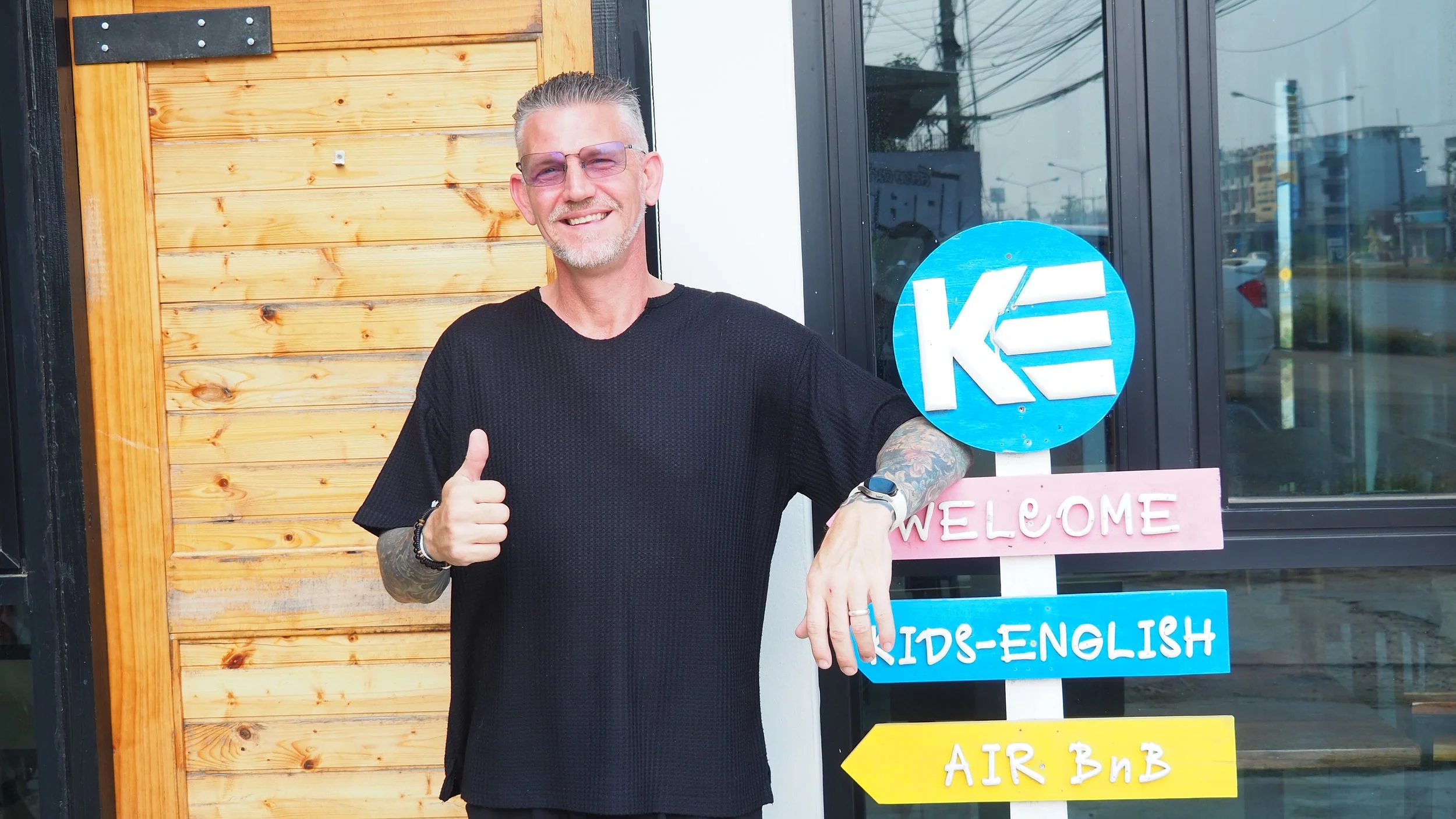
Matthew John
Co-Founder & Operations ManagerI'm Matthew, co-founder of Kids English Thailand. I've lived in Thailand for 20 years and work from our office in Ban Lum, Sukhothai. Since 2009 we have placed over 1,500 teachers in Thai schools, and water is one of the first things they ask about.
